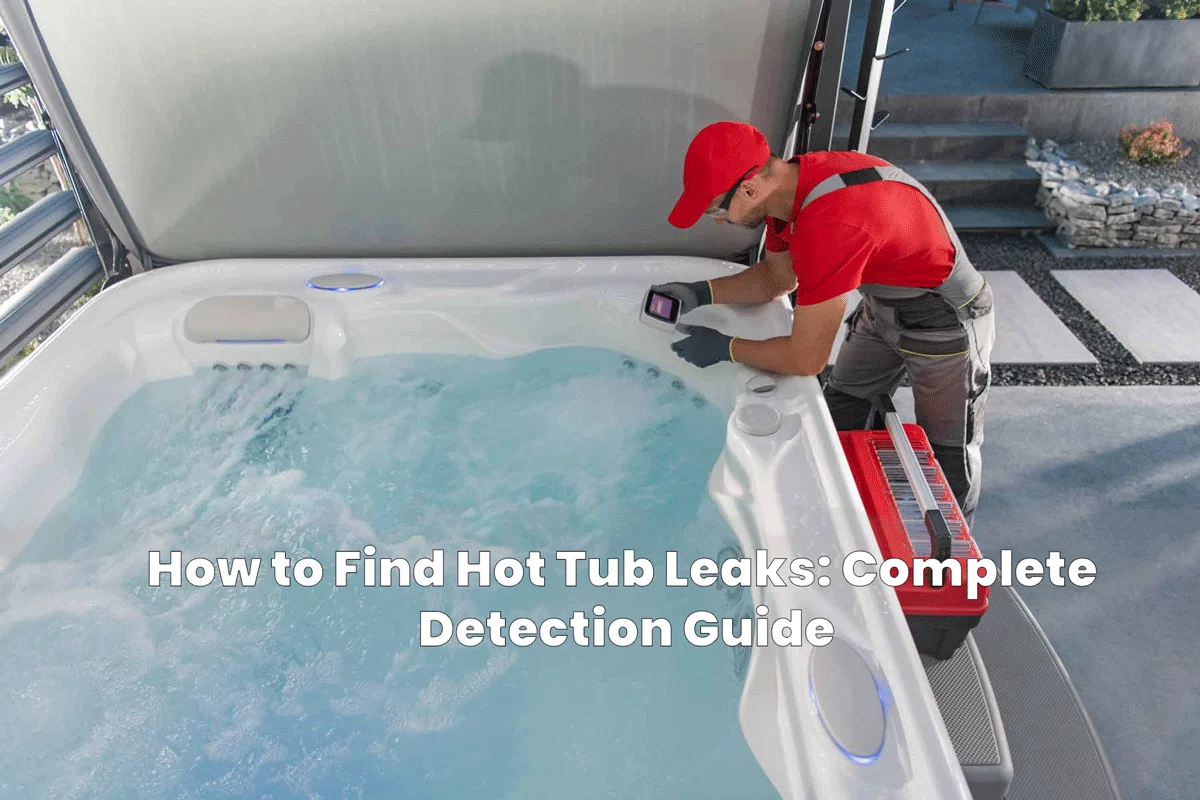
A hot tub is your personal oasis… until it starts leaking. Nothing is more bad news than water gathering at the bottom of a hot tub, rapid loss of water, and weaker jets. That may make relaxation stressful. Nonetheless, through the right process and the right tools. Self-empowered owners with a bit of self-diagnosis can fix most hot tub leaks without having to call in the costly professionals.
The following is what you should know in order to detect a leak in a hot tub, repair it and prevent further problems so that your spa functions impeccably.
These are Some Typical Indicators that Your Hot Tub Could Have a Leak
The early detection is the first step to finding the solution to any leak problem. The most common signs are the following:
- The falling of water at an accelerating rate
- Watermarks or wetness beneath the hot tub
- Sputtering of jets or strange noises of jets
- Soggy ground around the base of the tub
- Often required to top up the hot tub
These problems are a good sign of concealed or exposed leaks.
How to Locate a Leak in a Hot Tub Step-by-Step
Step 1: Turn off Power
- The first thing is to switch off the power supply to the hot tub to be safe. Place a line of painter tape on the current water line and let it sit 24-48 hours.
Step 2: Measure Water Loss
- You may also have a leakage in case you see that the water level has depleted significantly and there is no one who has used the tub.
Step 3: Carry out a Dye Test
- Food coloring is used to dye the dyes and set them at suspected leak locations- orifices, seals, seams, or fittings. When it pulls the dye in, Bingo you have a leak.
Step 4: Examine the Cabinet Interior
- Hot tub cabinet panels should be examined and water-saturated insulation or puddles checked with special attention paid to the pump and plumbing section.
Determining Areas of Leaks
A. Jet Leaks
Most likely the source is leaking jets. Jet gaskets or locking nuts tend to loosen up. Remove the spa panel, and tighten the jet fittings. Replace the gasket or entire jet body, should it become damaged.
B. Leaks Around Pump or Heater
O-ring or seal decay is the more common cause of leaks around the pump or heater. These will not require much time in renewing them.
C. Seals and Gaskets
This may be as a result of drying up of any of the gaskets, cracking or wearing out. They may need to be changed and afterwards sealant silicone can be used.
D. Cracking Shells of the Spa
There is also the possibility of hairline cracks to leak through the acrylic shell. Glue using an acrylic spa repair kit or waterproof epoxy.
E. Plumbing Connections and Filter Housing
Leaks in connections of Broken Filter housings, or bad PVC can be the cause. Re-seal or replace parts where necessary.
The Leak Repair
So you have located the leak, this is how you go about repairing it:
- Jet Leaks: Replace gaskets, tighten fittings or use sealant
- Pump/Heater Leaks: Change O-rings or unions
- Shell Cracking: An acrylic or epoxy spa repair kit should be used
- Seals: Change and block with silicone
Hot Tubs Inflatable Repair
It is because of this that inflatable versions such as SaluSpa are so vulnerable to minor punctures and leaks. With a specially designed repair kit of inflatable hot tubs one can use it.
- Air or vinyl leaks patch adhesive Put Teflon tape or silicone sealant over the pump connections
Leak Detection Kits & Tools Hot Tub Leak
Some of the components in DIY leak detection kits are:
- UV dye or colored solutions
- Sealant products
- Inspection mirrors
With these tools, it is possible to trace and correct minor or concealed leaks before they become a big problem.
Cost Comparison DIY Vs Professional Repair
DIY Costs:
- Repair kit: 20-50 dollars
- Sealant: $10–$30
- Replacement Parts: 15-75 dollars
- Professional Service:
- Hourly Fee: 75-125 dollars
- Detection & repair: combo 150-300+
It is Advised to Hire a Professional in Case:
- The source of leakage is not available
- Affected are the foam-insulated plumbing.
- You have tried the DIY repairs in vain already
Future prevention of Leaks
In order to Minimize the Possibility of Future Leaks:
- Check every Month: Jets, seals, fittings
- Keep Chemical Balance: Prevent seal and pipe erosion:
- Regularly Clean Filters: Do not allow the buildup of pressure
- Protect Your Spa: Prevent debris and UV rays entry
FAQs
What are the Most Common Signs of a Hot Tub Leak?
Fast evaporation, puddles near the base, jets sputter, and the ground is wet are all indicators telling of where the leak is. Also, hidden leaks will be brought to light with frequent water top-ups.
How Can I Locate a Hot Tub Leak at Home?
Unplug the appliance, mark water level, shut after 24–48 hours, use dye test, and inspect for any wet insulation inside or puddles on the cabinet.
What are the Main Sources of Hot Tub Leaks?
Most often leaks occur at jets, pumps, heater, gaskets, plumbing connections, or cracked shells. Inflatable tubs can get punctures too.
Should I Repair a Hot Tub Leak Myself or hire a Professional?
DIY usually works fine for minor leaks using sealants or gaskets, as long as the leak isn’t too hard to find or within foam-insulated plumbing.
How Can I Prevent Future Leaks in My Hot Tub?
Check jets, seals, and fittings monthly; keep chemicals in balance; clean filters; and protect your spa from debris and ultraviolet rays.
Conclusion
Leaks in the hot tub are annoying indeed, but fortunately, very easy to fix, and quite manageable. Leaks that are more prevalent are normally due to loose pipe fittings or accessories on the pump. It is always worth it, hence, to examine such loose pipes or fittings as soon as you realize that a hot tub has started to leak. This will save you time, money and waste.
Be aware, make frequent spot checks and have a spa that is free of hassles and leaks.