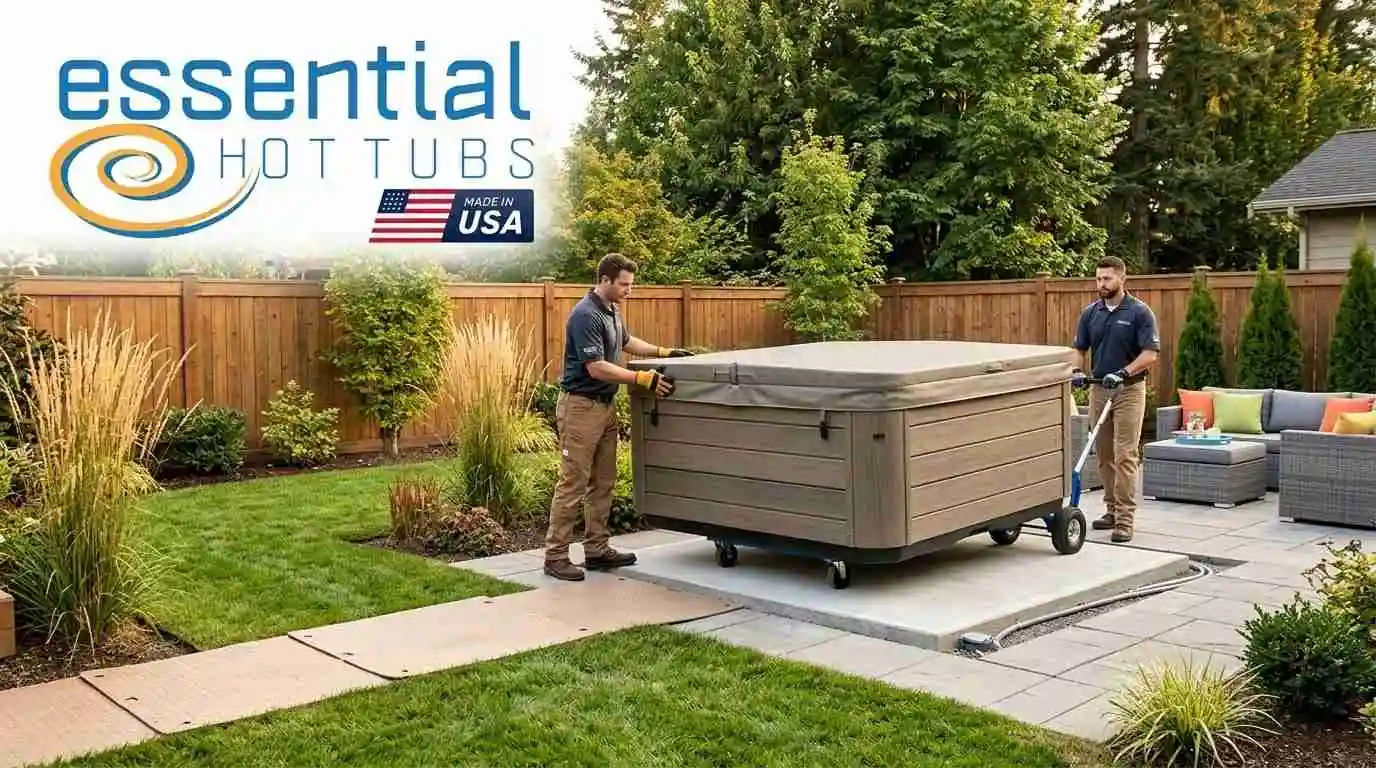
So you’ve bought a hot tub congrats, that’s the fun part done. Now comes the part nobody really talks about: getting your backyard ready before the delivery truck rolls up. A backyard hot tub is only as good as the ground it sits on, and honestly, most of the horror stories you hear about delivery day (or worse, problems that show up months later) come down to skipped prep. This guide covers everything involved in preparing backyard for hot tub delivery picking the right spot, hot tub base preparation, electrical work, drainage, and hot tub delivery access so the whole process, from the first phone call to your first soak, actually goes the way it’s supposed to.
Why Backyard Preparation Matters So Much?
A hot tub filled with water and a few people in it can easily weigh 3,000 to 5,000+ pounds. That’s not a small amount of weight, and it needs a surface underneath that isn’t going to shift, crack, or slowly sink over the seasons. Cutting corners on hot tub foundation work isn’t just a cosmetic risk an uneven tub puts real strain on the shell and plumbing, and in the worst cases it just becomes unsafe to use. Getting the backyard preparation for hot tub right from the start saves you a lot of grief (and money) down the road, and it makes delivery day itself far less of a headache.
Step 1: Choose the Right Location
Before you do anything else, figure out exactly where your hot tub in the backyard is going to live. A few things worth thinking through:
- Sun and shade A spot in full sun all summer can make the tub uncomfortably hot to the touch and drives up your energy costs trying to keep it cool. Partial shade tends to work best for most people.
- Privacy Fencing, a pergola, or some planting around the site adds privacy without getting in the way of hot tub delivery access.
- Proximity to the house Closer to the house usually means a shorter walk in winter and easier access to a nearby electrical panel, which matters a lot once you get into electrical requirements for hot tub setups.
- Views and function Think about what you’ll actually be looking at from inside the tub, and whether the spot suits entertaining or a quiet solo soak.
- Local regulations A lot of municipalities have setback rules from property lines, fences, and septic systems, so it’s worth a quick check before you settle on a location.
This is also a good time to start thinking through backyard hot tub design decking, lighting, screening even if you’re not building all of that before delivery day.
Step 2: Confirm Weight Capacity and Ground Suitability
If there’s one step people skip and later regret, it’s this one arguably the most important part of hot tub installation preparation.
- Get the wet weight. Your manufacturer’s spec sheet will list the “wet weight” the tub full of water plus its maximum number of occupants. That’s the number your surface has to support, not the empty shipping weight.
- Check load-bearing capacity. A well-built concrete pad handles this weight without much fuss. Decks are trickier you’ll want an engineer or contractor to confirm the joists and supports are actually rated for it, because most residential decks aren’t built with that in mind by default.
- Assess your existing ground. Soft, sandy, or poorly draining soil needs extra work compacted gravel, a proper sub-base, or a full pad before it can hold a tub reliably long-term.
If you’re not sure where you stand, a local contractor or your hot tub retailer can usually tell you fairly quickly whether your planned surface needs reinforcing.
Step 3: Build a Proper Base
Hot tub base preparation is really where most DIY installs succeed or fall apart. Here’s a rundown of your main options, roughly in order of how permanent they are.
Concrete Pad
Still the gold standard. A hot tub concrete pad poured about 4 inches thick, reinforced with rebar or wire mesh, and sized a bit larger than the tub’s footprint gives you a permanent, level, fully load-rated surface. The catch is curing time concrete needs at least 2 to 4 weeks before it can safely bear full weight, so this isn’t something you can pour the week before delivery.
Reinforced Deck
Want the tub up on a deck? Get it inspected first, or build it specifically to hot tub load specs from the start. That usually means extra joists and support posts directly under the tub’s footprint a standard deck build often isn’t enough on its own.
Gravel Pad
A hot tub gravel base is quicker, cheaper, and still perfectly solid for a lot of situations. Excavate 4 to 6 inches, lay a compacted gravel sub-base, then finish with a level surface for hot tub capped in crushed stone or paver base, tamped down firm. It won’t last forever like concrete, but for rentals, temporary setups, or tighter budgets, it does the job well.
Composite or Reinforced Pavers
There are also interlocking composite pads made specifically for hot tubs, which combine an easy install with solid weight distribution a decent middle ground between gravel and concrete.
Whatever you go with, the base needs to be:
- Perfectly level even a slight slope puts uneven stress on the shell and can throw off how the tub runs.
- Larger than the tub’s footprint extend it a few inches past the tub’s base on every side, both for stability and easier access later.
- Well-draining water sitting under or around the base speeds up wear and can undermine gravel or soil over time.
Step 4: Handle Electrical Requirements Early
Most hot tubs need their own dedicated circuit, and this really isn’t a job you can knock out the morning of delivery get an electrician booked in weeks ahead, not days.
- 220–240V vs. 110–120V Full-size spas typically run on a dedicated 220–240V circuit, usually 40 to 60 amps, pulled straight from your main panel. Smaller “plug and play” models can run off a standard 110V outlet, but it still needs to be dedicated, with nothing else sharing that circuit.
- GFCI protection A ground-fault circuit interrupter disconnect is required by code just about everywhere, both for safety and to pass inspection.
- Distance from the panel The further your chosen spot is from the panel, the more wiring, conduit, and labor it takes, so this is worth weighing when you’re picking a location.
- Permits and inspection Plenty of areas require a permit and a sign-off for hot tub electrical work. Skip this and you could run into problems later with insurance or when you go to sell the house.
Whatever you do, get the electrical work finished and signed off before delivery day. Most installers won’t fill or power up a tub without it.
Step 5: Plan for Drainage
Hot tub drainage is one of those things nobody thinks about until water starts pooling somewhere it shouldn’t.
- Grade the ground around the pad so rainwater flows away from the tub instead of toward it.
- If your chosen spot sits in a natural low point of the yard, a French drain or a gravel trench nearby can save you trouble later.
- Leave a clear path for the tub’s own drain valve to empty out onto gravel, into a drywell, or somewhere that won’t damage plants or pool up near your house’s foundation.
Step 6: Clear Access and Delivery Path
Hot tub delivery access trips up more people than almost anything else on this list. The delivery crew needs a clear, unobstructed path from the street or driveway all the way to the install site.
Walk the whole route yourself and check for:
- Gate widths Measure every gate the tub has to pass through. Most tubs run 7 to 8 feet across, and a lot of standard gates just aren’t wide enough you may need to remove a fence panel temporarily.
- Overhead clearance Low branches, eaves, or power lines along the route can get in the way of a crane or a crew carrying the tub by hand.
- Ground surface along the path A muddy lawn, steps, or a steep slope can make a route impassable. Plywood sheets laid down beforehand can protect the grass and give the crew traction.
- Turning space Hot tubs don’t bend around corners. Tight side yards or sharp turns sometimes mean the only option is a crane lift over the house instead of carrying it through, which changes both your cost and your timeline.
- Parking for the delivery truck Make sure there’s actually room for the truck, and a crane if one’s needed, near your access point.
If a crane lift looks likely, tell your delivery company as early as possible it needs its own scheduling, and sometimes a permit too if a public street is involved.
Step 7: Confirm Clearance Around the Tub
Backyard clearance for hot tub placement isn’t just about the delivery route it matters for maintenance and safety long after the tub is in.
- Leave at least 2 to 3 feet of clearance on every side for panel removal and general servicing.
- Keep a safe distance from fences, sheds, and other structures, per your manufacturer’s guidelines and local code.
- Double-check the equipment access panel side isn’t blocked by landscaping, steps, or built-in seating.
Hot Tub Base Options Compared
| Base Type | Durability | Typical Cost | Prep Time | Best For |
|---|---|---|---|---|
| Concrete pad | Excellent (permanent) | Highest | 2–4 weeks (curing) | Permanent installs, heaviest tubs |
| Reinforced deck | Excellent, if engineered | High | Depends on build/inspection | Elevated sites, existing deck upgrades |
| Gravel pad | Good | Low–moderate | A few days | Budget-friendly, temporary, or rental properties |
| Composite/paver pad | Good | Moderate | 1–2 days | Fast install with solid weight support |
Step 8: Final Hot Tub Installation Site Checklist
Before delivery day, run through this hot tub setup checklist:
- Location chosen with sun, privacy, and view factored in
- Wet weight confirmed against pad/deck load capacity
- Base built, cured (if concrete), and perfectly level
- Base footprint larger than the tub on all sides
- Dedicated electrical circuit installed, GFCI protected, permitted and inspected
- Drainage graded away from the pad
- Delivery path measured gates, overhead clearance, ground surface
- Crane lift arranged in advance, if needed
- Clearance maintained around the tub for panel access
- Landscaping, furniture, or obstacles cleared from the path and site
A Few Backyard Hot Tub Ideas Worth Considering
While you’re getting the site ready, it’s worth thinking a bit further ahead too:
- Surround decking with built-in steps makes getting in and out of the tub feel a lot more natural.
- Pergolas or shade sails help on hot days and give you somewhere to hang string lights.
- Privacy screening lattice panels, tall planters, or a short fence run can turn an open backyard corner into an actual retreat.
- Nearby storage for towels and chemicals keeps upkeep simple instead of a constant back-and-forth to the house.
None of this is required before delivery, but planning for it now means your base and clearances can accommodate it later without tearing anything up.
FAQs:
Everything you need to know before delivery.
How far in advance should I prepare my backyard for hot tub delivery?
Give yourself 4 to 6 weeks, especially for a concrete pad (2–4 weeks curing) or electrical work. Gravel bases are quicker, but permits often slow things down.
Can a hot tub sit directly on grass or dirt?
Not for long. Bare ground shifts and won’t hold the wet weight. You need a proper pad concrete, gravel, or composite pavers.
Does a hot tub have to be on a dedicated electrical circuit?
Yes, almost always. Full-size spas need a 220–240V dedicated circuit with GFCI protection; even 110V models need their own outlet. Use a licensed electrician.
What if my gate is too narrow for the hot tub to pass through?
Crews can often remove a fence panel to widen the path. If not, a crane lift is the usual fallback arrange it with your delivery company early.
How much clearance does a hot tub need around it?
At least 2 to 3 feet on every side for panel access and servicing.
Do I need a permit to install a hot tub?
Often yes, especially for electrical work. Check with your local building department before delivery day.
What’s the cheapest acceptable base for a hot tub?
A well-built gravel pad excavated, compacted, and capped with crushed stone is usually the most affordable option.
Conclusion
At the end of the day, getting your backyard ready properly is what separates a smooth hot tub installation from a stressful delivery day. It’s easy to underestimate how much goes into it most people picture a truck showing up and a tub getting set down, and that’s it. In reality, the groundwork you put in weeks before delivery decides whether that day goes off without a hitch or turns into a scramble. Pick a location that actually works for your yard, build a base genuinely rated for the weight, and don’t rush the curing time if you’re going with concrete.
None of this has to be complicated, and you don’t need to be a contractor to get it right it just takes a bit of planning. Sort your electrician and permits early, walk your delivery path yourself, and be honest about whether a crane is needed rather than finding out on the day. Do the prep properly, and delivery day turns into exactly what it should be: the crew sets the tub down on ground that’s ready for it, the power’s already there, and within a day or two you’re filling it up.